




Last Updated on October 21, 2026 by Eve Dawes
I’ve wanted to try fractional laser treatments for years, but between the cost, downtime and some pretty intimidating recovery photos, I kept putting it off. So when Tria launched its at-home fractional laser, I was intrigued but also slightly terrified. I’ve already had really good results with Tria’s hair removal laser, so I decided to put the FRX to the test. I’m now five weeks into my treatment course, and in this Tria FRX review, I’m sharing what the treatments actually feel like, my before-and-after results, how red and dry my skin gets, and whether I’ve noticed improvements in fine lines, pigmentation and texture. I’ll also cover how the laser works, safety, clinical results and the skincare products I’ve been using afterwards.
Disclosure: The Tria FRX Skin Rejuvenating Fractional Laser was gifted by Tria. As always, all opinions are my own. This article contains affiliate links.
Why I Chose the Tria FRX Skin Rejuvenating Fractional Laser
I’ve been interested in fractional laser treatment for years, but I’d never quite convinced myself to book an in-office treatment. Between the cost, downtime and trying to fit appointments around work and travel, it always felt like something I’d get around to “one day.” In the meantime, my skin’s still aging.
What made the Tria FRX Skin Rejuvenating Fractional Laser different was that I’d already had a great experience with Tria’s at-home hair removal laser and it’s FDA cleared. I’d worked with the brand before, used the device myself and knew the technology delivered real results, so I already trusted Tria as a brand before this device ever landed on my doorstep.
The other thing that appealed to me was how realistic it seemed to fit into my routine. Treatments take around four minutes for the entire face, there’s little to no downtime other than the possibility of some redness for up to an hour afterwards, and clinical studies showed visible improvements after just six weeks. As someone who’s always juggling work, content creation and travel, that’s much easier to commit to than scheduling repeated clinic appointments.
I’m also at the stage where I’m becoming more focused on treating the signs of aging rather than just covering them up. Fine lines, uneven skin tone, texture and chickenpox scarring are all things I’d love to improve, but I wasn’t ready to invest the time or money on an in-office fractional laser treatment. An at-home fractional laser felt like a much more approachable and less scary place to start.
Is the Tria FRX Safe? Why I Was Nervous to Try an At-Home Fractional Laser
I’ll admit, I was nervous. The words ‘fractional laser’ sound pretty intimidating when you’ve only ever associated them with dermatologist clinics and dramatic before-and-after photos. I didn’t want to use something that felt too aggressive for my skin or risk doing more harm than good.
What reassured me was learning more about the technology before I started. The Tria FRX is FDA-cleared for safe at-home use and uses the same type of non-ablative fractional laser technology used in professional clinics, just adapted into a device designed for home treatments. Instead of treating the entire surface of your skin, it creates tiny treatment areas beneath the surface by targeting the water in your skin. Your body then naturally repairs those microscopic areas by producing new skin cells while stimulating collagen and elastin, helping to improve fine lines, wrinkles, pigmentation and skin texture over time.
Speaking with one of Tria’s educators also helped put my mind at ease. They walked me through exactly how to use the device, answered all of my questions and explained the importance of starting slowly, following the recommended treatment schedule and allowing my skin time to adapt rather than trying to rush the process.
While I still felt nervous trying it for the first time, and still get a little nervous because of how warm and red it temporarily feels afterwards, I do feel much more confident using it than I did when I first opened the box. Over the next few months, I’ll be documenting everything from my first treatment and comfort level to progress photos, redness, healing and whether I actually see improvements in my skin. If you’re curious about the Tria FRX Skin Rejuvenating Fractional Laser, be sure to follow along here or on Instagram so you don’t miss the updates.


What Is the Tria FRX Skin Rejuvenating Fractional Laser?
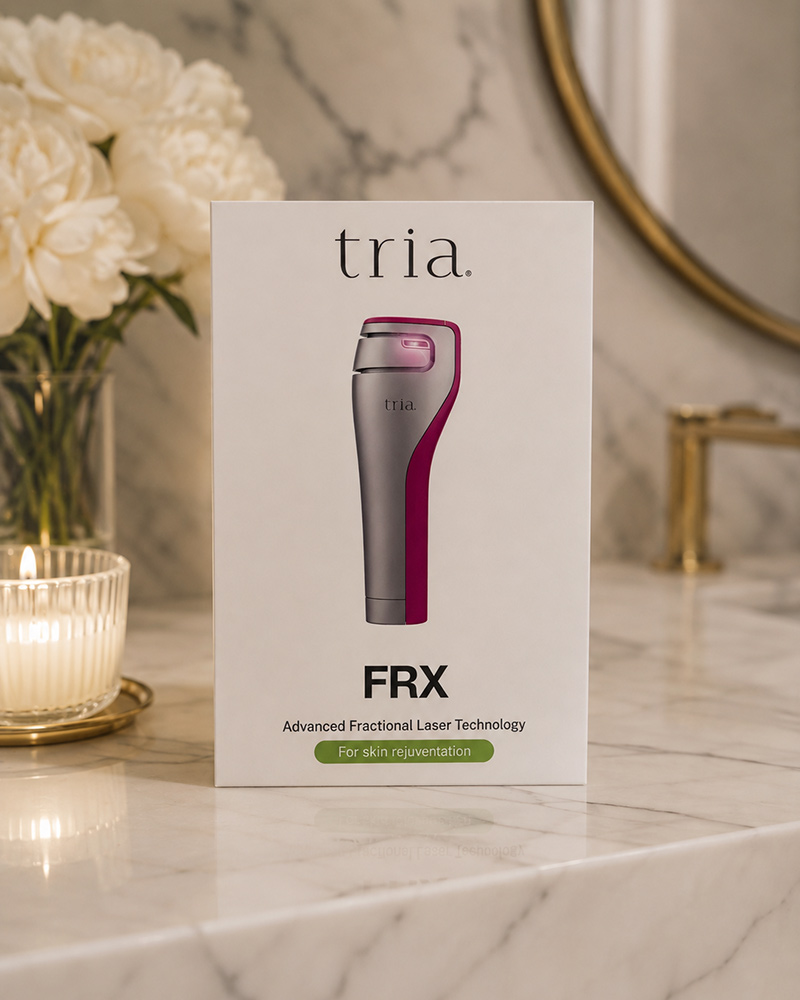
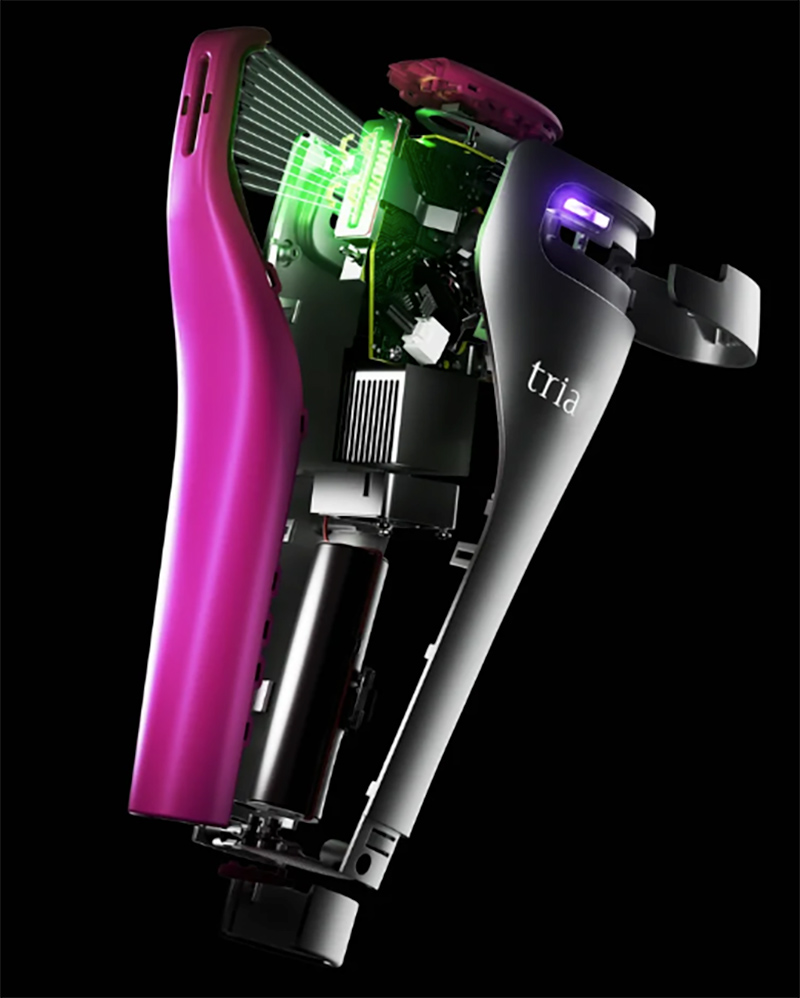
The Tria FRX Skin Rejuvenating Fractional Laser (2nd Generation) is an FDA-cleared at-home fractional laser designed to improve the appearance of fine lines, wrinkles, pigmentation and uneven skin texture using non-ablative fractional laser technology. Rather than treating the entire surface of your skin, fractional laser creates tiny treatment zones that stimulate your skin’s natural repair process, encouraging the production of new skin cells, collagen and elastin over time.
The Tria FRX uses a 1440 nm wavelength, fractional non-ablative laser to treat your skin. It works through a process known as selective photothermolysis. This is the process whereby the laser targets water in the skin, creating Microthermal Treatment Zones (MTZs). Your body then heals these microscopic areas, creating new skin cells with increased collagen and elastin, reducing the multiple signs of aging. Tria
The second-generation FRX also introduces several improvements over previous models, including a redesigned body, a larger battery with over 50% longer battery life, USB-C charging and updated internal cooling designed to improve thermal performance.
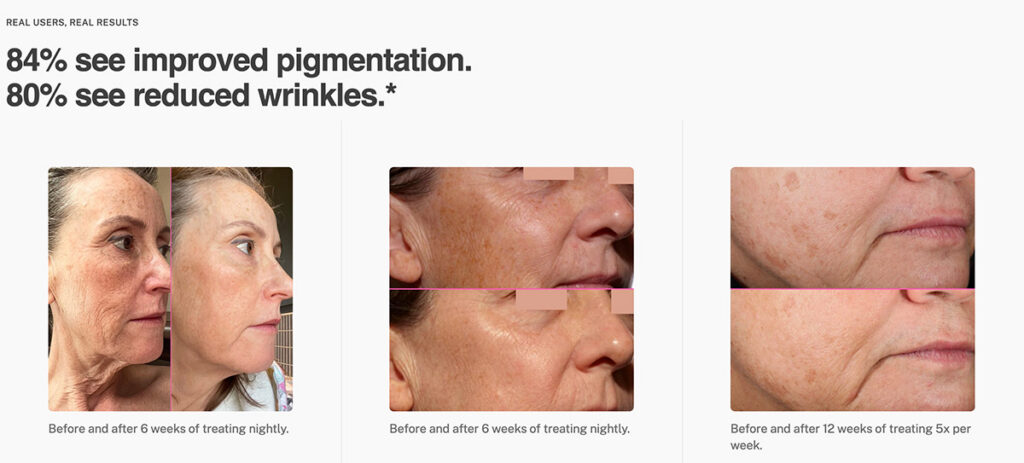
According to Tria’s clinical data:
- 84% of users saw improvements in pigmentation and skin tone.
- 80% saw a reduction in fine lines and wrinkles.
- 89% reported smoother skin after treatment.
Who Is the Tria FRX Best For?
One of the reasons I found the Tria FRX so appealing is that it addresses several of the concerns many of us start noticing as our skin matures.
It may be worth considering if you’re looking to improve:
- Fine lines and wrinkles
- Uneven skin tone
- Pigmentation and sun damage
- Rough skin texture
- Acne scarring
- Overall skin radiance
It’s also a good option if you’ve been curious about fractional laser treatment but don’t feel ready to commit to the cost, appointments or recovery associated with an in-office procedure. The Tria FRX brings that technology into a home device that fits around everyday life, with treatments taking just four minutes.
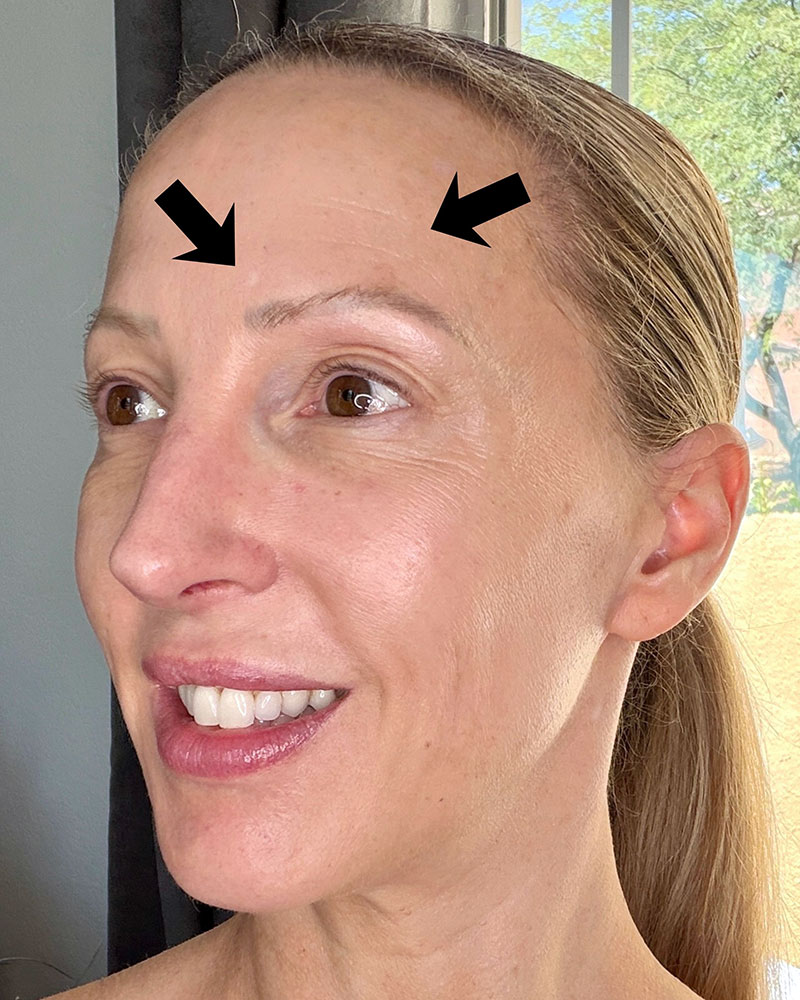
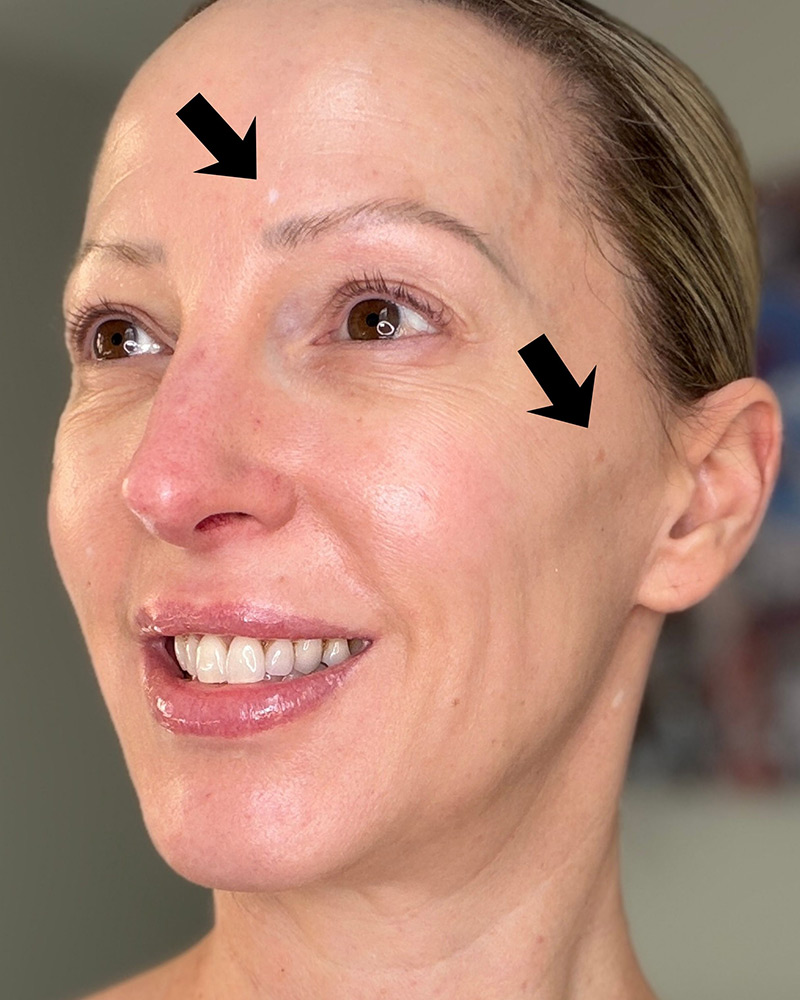
These are my before photos showing the areas I want to work on most. All are unedited but two are taken from the same angle in the same room, but I’ve included both because even then you can see how much the lighting changes what my skin looks like. I want you to have all of that context from the start, so when we get to the after photos, it’s not a case of, “Well, she just looks better because the lighting’s different.”
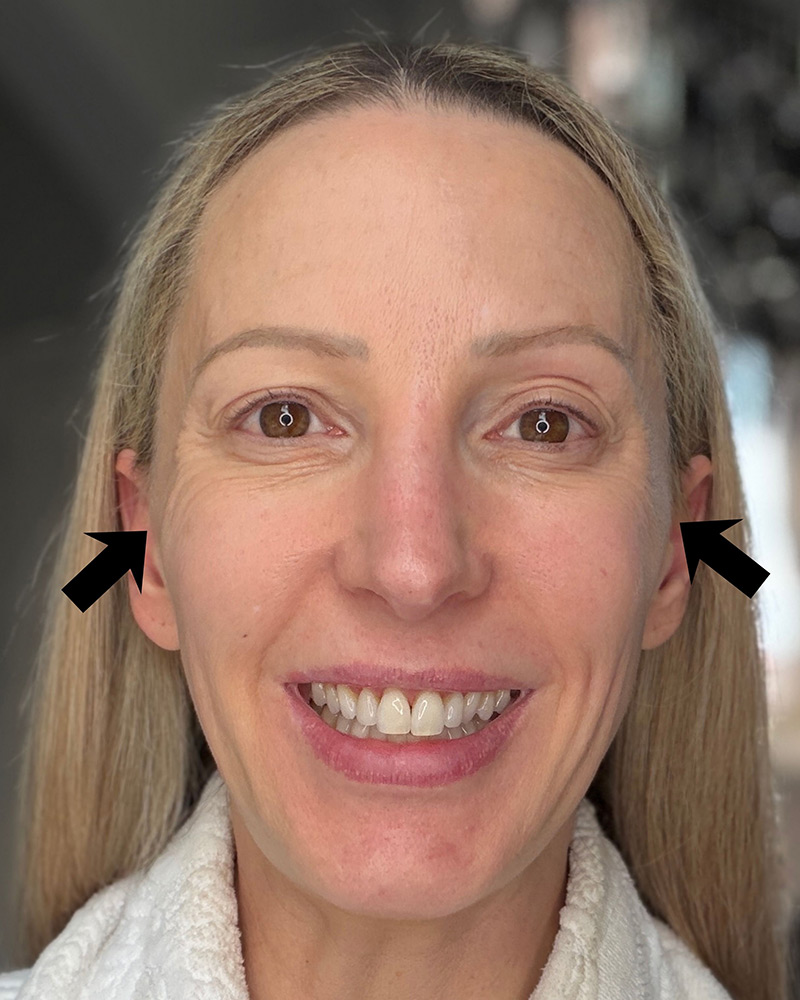
Above and below, before starting Tria FRX at-home fractional laser treatments.
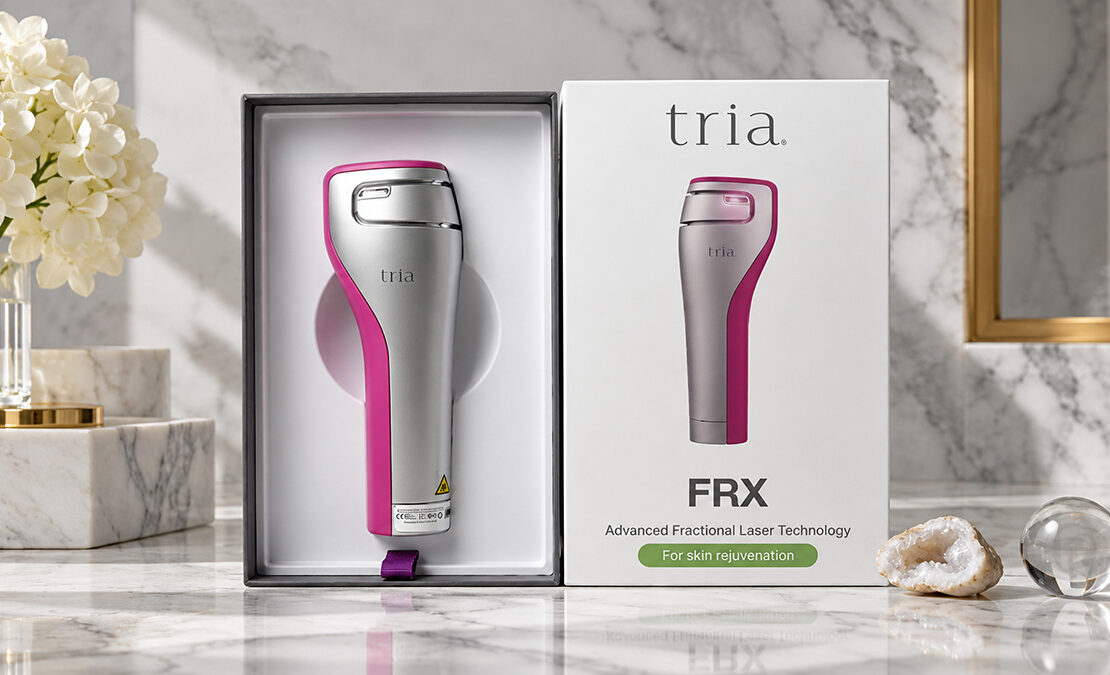
Unboxing the Tria FRX Skin Rejuvenating Fractional Laser
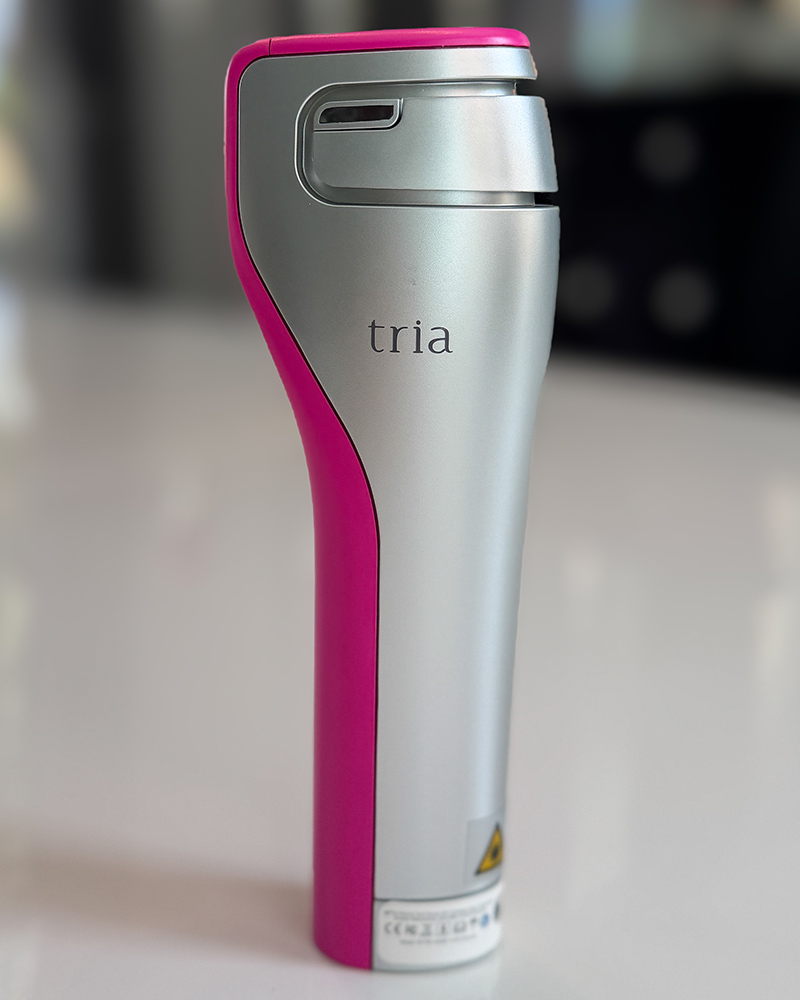
As someone who reviews a lot of beauty devices, first impressions matter. Before I’d even turned the device on, I wanted to know whether it felt like a premium piece of skincare technology or just another gadget.
Inside the box you’ll find:
- Tria FRX Skin Rejuvenating Fractional Laser
- Multi-region charger (UK, EU and US)
- USB-C charging cable
- Quick Start Guide
- User Manual (Tria Laser)
Packaging might not change your results, but it does set expectations, and the Tria FRX immediately feels like a premium device. Everything is neatly presented, the instructions are easy to follow, and the updated design feels modern without being overly complicated.
My First Impressions
I’ll be honest, my first reaction wasn’t excitement. It was, “This looks and sounds far more scary than I expected from an at-home fractional laser device.” When you’ve only ever seen fractional laser treatments performed in clinics, holding a laser device in your own hand feels surprisingly intimidating.
That feeling quickly changed after speaking with one of Tria’s educators. We talked through exactly how the device works, what I should expect during treatments and how to get the best possible results. Having that conversation made me feel much more confident before starting.
I also really liked that the treatments themselves fit into real life. Treating your entire face only takes 2-10 minutes depending on which level you’re using, which removes one of the biggest excuses many of us have for not sticking with skincare devices, not having enough time. Consistency is usually the hardest part, and this feels realistic enough to become part of a weekly routine for 6-12 consecutive weeks.
Why I Waited to do My First Treatment
Why I Waited to Do My First Treatment
I originally wanted to wait until the Las Vegas weather cooled down before starting treatments. With summer temperatures regularly reaching triple digits and spending time outdoors walking my dog, I was particularly conscious of sun exposure while using a fractional laser.
After speaking with Tria’s educator, I’d planned to wait for cooler weather, but I eventually decided to start on September 14th rather than keep putting it off. It was still hot, so I’ve been especially diligent about SPF 50 and avoiding unnecessary sun exposure throughout my treatment course.
My Tria FRX Review Timeline: From My First Treatment to 23 Sessions
My Tria FRX Review Timeline
I’m documenting my experience throughout the recommended 12-week treatment course, starting with Level 1 before progressing to Level 2. Here’s how my skin has responded so far, including treatment discomfort, redness and the changes I’ve noticed.
My First Tria FRX Treatment: Level 1
Before starting, I completed the recommended sensitivity test, and the redness disappeared within an hour. That gave me the confidence to try my first full treatment on Level 1. I was surprised by how warm, tingly and spicy it felt. I consider myself to have a fairly high pain tolerance from being a ballerina and bodybuilder, so I wasn’t expecting the lowest setting to feel quite so intense. My skin was visibly red, warm and tight afterwards, but the redness settled within approximately an hour. I completed five treatments on Level 1 before progressing to Level 2. By the end of that first week, I felt more comfortable using the device, and the heat and redness seemed to settle more quickly.
Moving Up to Level 2: Does the Tria FRX Hurt?
Level 2 was a noticeable jump in intensity. The heat and prickling sensation were much stronger, and my skin became very red during treatment. I have quite thin, fair, translucent skin, so I’ve been deliberately cautious. On some areas, particularly my cheeks, I’ve stopped before completing the full allocated treatment time because I didn’t want to overdo it.
What’s interesting is that after over 20 treatments, Level 2 still feels just as intense as it did during my first session on that setting. I’m more confident using the device, but I haven’t really adjusted to the discomfort. I haven’t progressed to Level 3 because Level 2 is spicy enough for me but I’ll keep you posted.
My Five-Week Update After 23 Treatments
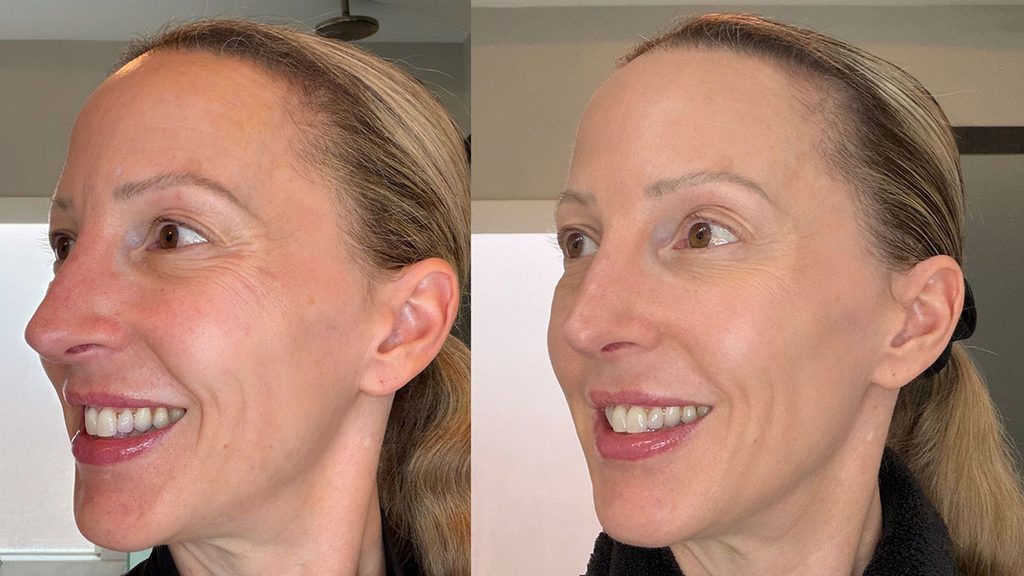
I’m still getting very red and hot immediately after treatment, although I’m always fine by the next morning. I’ve also started noticing improvements in my skin, particularly in pigmentation, overall radiance and texture. My deeper wrinkles and old chickenpox scars haven’t changed nearly as much, but I’m only five weeks into the recommended 12-week course so stay tuned.
Tria FRX Before-and-After Results: Does It Actually Work?
These are my results after 23 treatments. My main concerns were fine lines, dark sunspots, uneven skin texture and some old chickenpox scarring. So far, I think the FRX has done more for my pigmentation, overall radiance and texture than for my deeper wrinkles and scars. My skin looks more even in color and texture, but my deeper lines and chickenpox scars are still pretty pronounced. These are my interim results, and I’ll continue adding photographs as I progress through the remaining treatments.


How I Fit Tria FRX Into My Skincare Routine
I always do my treatments in the evening so my skin has time to recover overnight. Depending on the level, a full-face treatment takes between two and ten minutes.
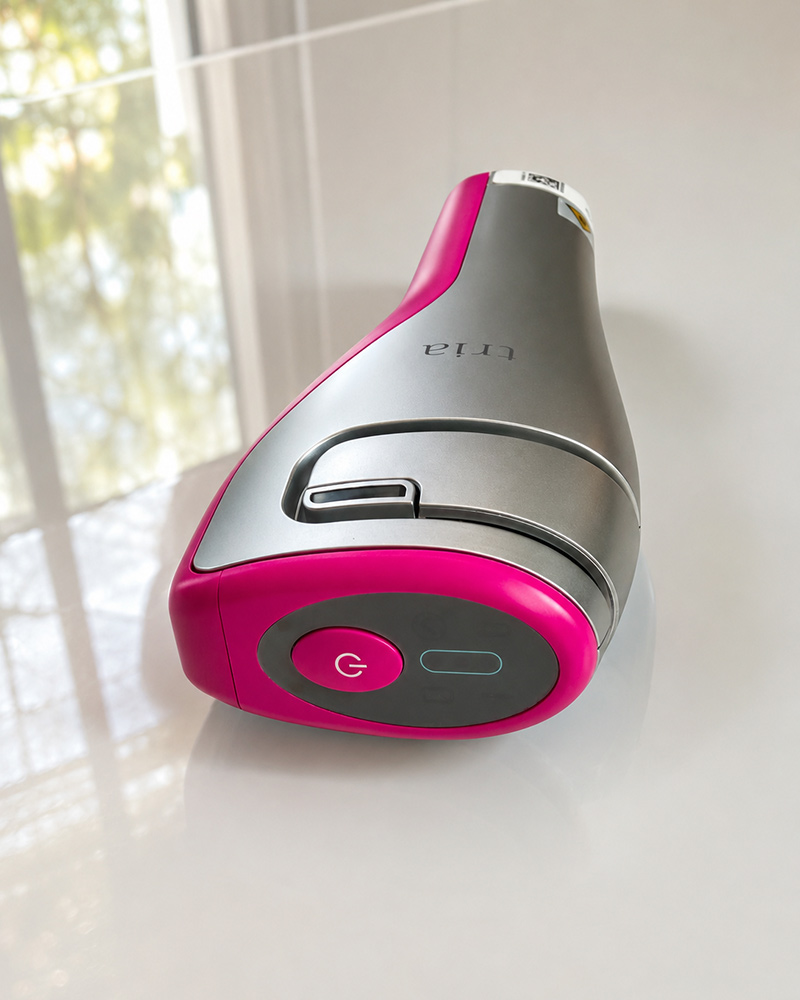
The device divides your face into four zones: both cheeks, forehead and chin. It beeps when it’s time to change zones, although I haven’t always completed the full allocated time on Level 2 because of the discomfort.
I’ve found that shorter, controlled sweeps help maintain contact with the skin, particularly on my forehead, which is the area I’ve struggled with most. I also recommend using a mirror so you can see exactly where you’re treating.
One thing I specifically checked with Tria was whether I could use the FRX around my microbladed eyebrows. They advised keeping the treatment window at least 1–2 cm away from the pigment. The manual also warns against using it over permanent makeup or tattoos, or directly on your eyes or eyelids.
The recommended treatment schedule is five days per week for 12 weeks, without treating the same facial zone more than once within 24 hours.
Tria FRX Side Effects: Redness, Dryness and Downtime
Immediately after treatment, my face feels very warm and looks red, although some areas become redder than others. The redness generally settles within about an hour, and by the following morning, I’m usually fine to go about my day. That’s been one of the biggest positives for me. I was initially worried about significant downtime and scabbing, but thankfully that hasn’t been my experience. However, my skin has become noticeably drier throughout the treatment course, so I’ve had to step up my hydrating skincare.
My Tria FRX Aftercare Routine
I generally wait around 30 minutes after treatment before applying my nighttime skincare, depending on how my skin feels.
I’ve been alternating between Dr. Diamond’s Metacine Plasma followed by HYDRO/0 and ZIIP Skincare’s ZIIP Barrier Boost collection (use discount code EVAD for 10% off). I’ve found both routines hydrating and non-irritating, and I don’t think one has necessarily been better than the other for me.
When my skin has felt particularly red or dry, I’ve also used CALECIM‘s overnight recovery treatment (use discount code EVE15 for 15% off), which I really like for instant calming and to help with repair.
The following morning, I keep my skincare simple and always use SPF 50. I’ve also avoided introducing lots of additional active ingredients, including retinol and exfoliating acids, while completing the laser treatments.
Is Tria FRX Worth It? My Verdict After Five Weeks
So far, I’m encouraged by the improvements in pigmentation, radiance and skin texture. I like that the treatments are relatively quick and easy to fit into my evening routine, and the recovery has been more manageable than I expected. However, Level 2 is still uncomfortable after 23 treatments, and I haven’t noticed substantial improvements in my deeper wrinkles or old chickenpox scars.
I think the FRX is worth considering if your main concerns are uneven skin tone, pigmentation and texture, provided you’re a suitable candidate and prepared to follow the recommended treatment schedule. I’m reserving my final verdict until I’ve completed the full 12-week course, when I’ll update this review with more before-and-after photos.
Tria FRX Frequently Asked Questions
Do You Need to Use Tria FRX Level 3 to See Results?
I’ve noticed improvements in pigmentation, radiance and texture while using Level 2. I haven’t progressed to Level 3 because I still find Level 2 uncomfortable, and I’d rather be cautious than rush through the settings.
Can You Use Retinol or Exfoliating Acids After Tria FRX?
I’ve avoided retinol and exfoliating acids during my treatment course because my skin has been drier and more sensitive. Follow Tria’s aftercare instructions and consult a dermatologist if you’re unsure about combining treatments.
Shop Tria FRX Skin Rejuvenating Laser With My Discount Code
Use code EVETRIA for 10% off or 20% off when you buy 2 Tria Devices (includes their hair removal laser) during their sale, subject to the current offer at checkout. I’ll continue updating this review as I complete the full treatment course, including my final results and additional before-and-after photos.
If you’re considering an at-home fractional laser, bookmark this website and check back for updates.
Follow
Other beauty device reviews I think you’ll love